. By Static Protection (Crucial for Safety)
Type A: Standard bags made from plain woven polypropylene. Used for non-hazardous materials. No static protection.
Type B: Made from standard fabric but designed to prevent sparking. Used for dry, combustible materials, but not around flammable gases.
Type C (Conductive): Interwoven with conductive threads that must be grounded during filling/discharging. Safe for highly flammable environments.
Type D (Anti-Static): Made from special fabric that safely dissipates static electricity without needing a ground connection.
2. By Construction Style
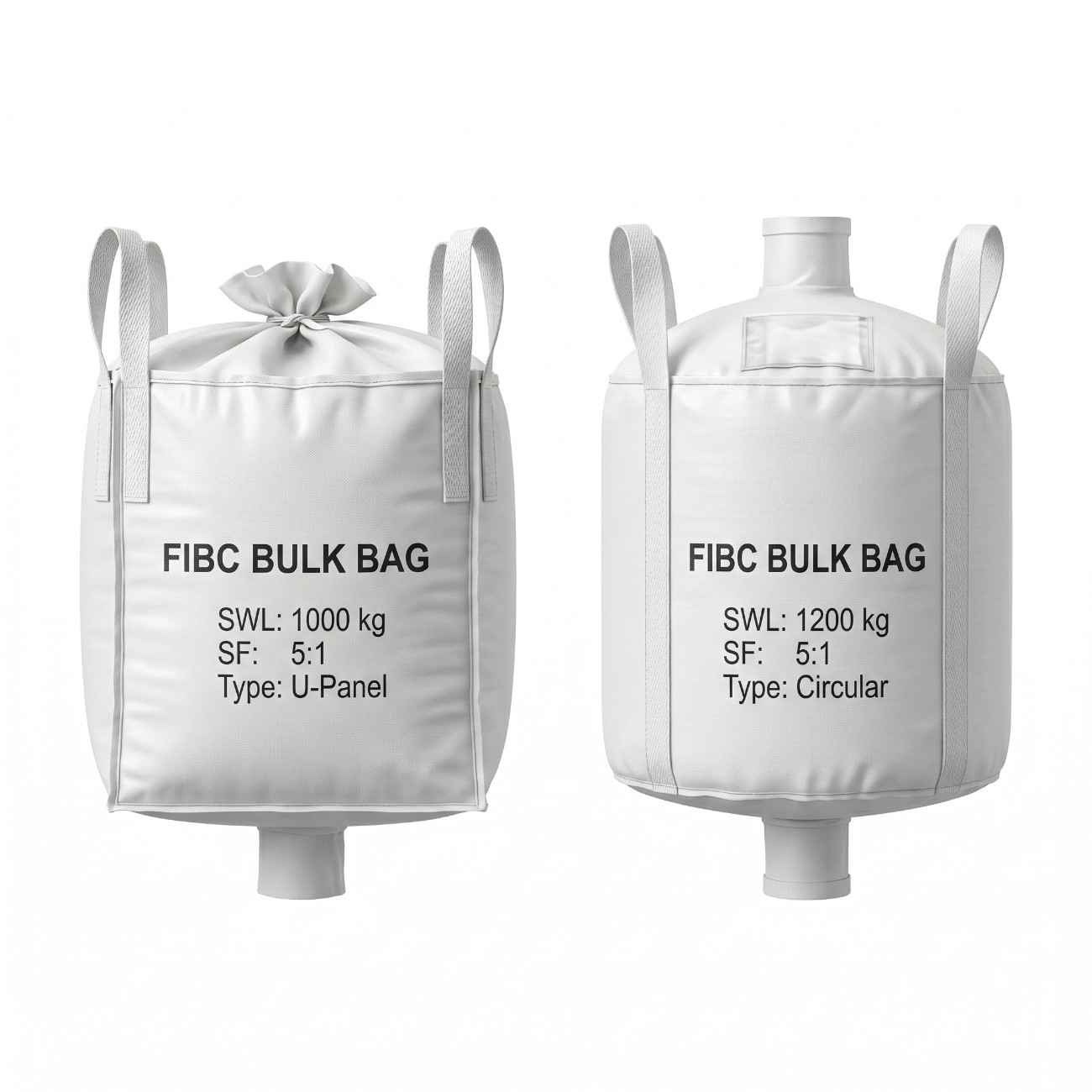
U-Panel Bags: Made from three body panels (one central “U” piece and two sides). Excellent structural integrity and safe working loads.
Circular / Tubular Bags: Made from a single piece of tubular fabric. They lack vertical seams, offering better moisture resistance and shape retention.
Baffle Bags: Feature internal fabric baffles that keep the bag perfectly square when filled. Best for maximizing shipping container space.
Four-Panel Bags: Made from four distinct fabric panels sewn together. Holds its shape well when stacked.
Key Benefits to Highlight on Your Website
When pitching to B2B clients, emphasize these selling points on your homepage or category headers:
Cost-Effective: Maximizes shipping space and eliminates the need for pallets or rigid containers.
High Capacity: Exceptional strength-to-weight ratio; a bag weighing just 5–7 lbs can hold over a ton of material.
Space-Saving: Can be folded flat when empty, taking up minimal warehouse storage space.
Customizable: Available with various filling, discharging, and lifting options to match any automated or manual facility.
Eco-Friendly: Fully recyclable and available in reusable designs (6:1 Safety Factor).